To me, very very little could be worth the heartache I have felt. But I do believe that God would not let me walk through something this hard without a blessing on the other side.
And I don’t know what the point was, or what blessing and lesson will turn up. But I have observed that since I am now single again, I have had much more opportunity all of a sudden to do “teaching” sort of things. The thing is, I would have had in all probability, the same opportunity if I were still dating him. But for whatever reason, they are all turning up now.
As in past experiences, it takes a life experience to get me into the throes of otherwise dry theological study. When I was a friend to several Mormons, I started to look into why I believe in the trinity, what I believe about heaven and continuing revelation, and became more largely literate of scripture.
More lately, my good friends are Catholic, and that has also caused me to dive more deeply into church history, the sufficiency of Scripture and Tradition, Church Authority, Apostolic Succession, as well as the issues I really have trouble with—the elevation of certain human creatures above others of us. I still don’t ultimately know what course this will take in my life. But I am learning and growing and feel a great stirring in my life, and I see both sides (Protestantism and Catholicism) more clearly than before. But neither compels me over the other. God will show me the way, however.
The interesting thing, though, is that in the wake of all this awfulness of the last few months, I am really learning more about my gifts and actually getting to put them into practice unlike before. And it is also further confirmation in my mind that I want to be a Professor and teach college students.
Tuesday, July 12, 2011


Presentation on Polycarp and Early (Ante-Nicene) Church Fathers
OVERARCHING AD 30-100 - Apostolic Age
- Period of 12 apostles from the crucifixion and great commission in Jerusalem to the death of John.
- Special significance as age of direct apostles of Jesus Christ. Primary source is books of Acts.
AD 48: Council of Jerusalem
- It is considered by Catholics and Orthodox to be a prototype and forerunner of the later Ecumenical Councils. The council decided that Gentile converts to Christianity were not obligated to keep most of the Mosaic law, including the rules concerning circumcision of males, however, the Council did retain the prohibitions against eating blood, or eating meat containing blood, or meat of animals not properly slain, and against fornication and idolatry.
AD 51: Jewish Persecution of Christians in Rome
- Becomes so disruptive that Jews are expelled from the city.
AD 57:Paul’s letter to the Romans
AD 64-68: Nero blames the fire in Rome on Christians; persecutes ruthlessly.
- Peter and Paul were executed during this persecution
AD 69: Polycarp born in Smyrna
AD 81: Domitian persecutes Christians
AD 98: Trajan reigns:
- Institutes a policy toward Christians not to seek Christians out, but if they were brought before the authorities they were to be punished, usually executed, for being Christians.
AD 120-140: Polycarp wrote letter to the Philippians.
AD 144: Marcion excommunicated
- Heretic, creator of widespread heresy Marcionism. Rejects the Old Testament, rejects most of the New Testament, and teaches that Christ only appeared to be human. His challenge helps the church realize the necessity of formally recognizing the canon
AD 155: Polycarp was martyred
OVERARCHING AD 100-325: Ante-Nicene Era
- Ante-Nicene Era lasted from the death of Christ’s direct Apostles through the First Council of Nicaea
- Council of Nicea: Christian bishops convened in Nicaea, Turkey. The Council was the first effort to attain consensus in the church through an assembly representing all of Christendom.
- Its main accomplishments were settlement of the Christological issue of the relationship of Jesus to God the Father; the construction of the first part of the Nicene Creed; settling the calculation of the date of Easter; and promulgation of early canon law.
Monday, July 11, 2011
Your Great Name: song link and lyrics
Your Great Name
Jesus, worthy is the Lamb
that was slain for us
Son of God and man
You are high and lifted up
And all the world will praise
All the weak find their strength
Performed by Natalie Grant
Lost are saved, find their way
At the sound of Your great name
All condemned feel no shame
At the sound of Your great name
Lost are saved, find their way
At the sound of Your great name
All condemned feel no shame
At the sound of Your great name
Every fear has no place
At the sound of Your great name
The enemy, he has to leave
At the sound of Your great name
At the sound of Your great name
The enemy, he has to leave
At the sound of Your great name
Jesus, worthy is the Lamb
that was slain for us
Son of God and man
You are high and lifted up
And all the world will praise
Your great name
All the weak find their strength
At the sound of Your great name
Hungry souls receive grace
At the sound of Your great name
The fatherless find their rest
At the sound of Your great name
The sick are healed, the dead are raised
At the sound of Your great name
Jesus, worthy is the Lamb
that was slain for us
Son of God and man
You are high and lifted up
And all the world will praise
Your great name
Redeemer, My Healer, Lord Almighty
Sustainer, Defender, You are my king
Sunday, July 10, 2011
Miracle Service
I went to a “Miracle Service” last night in Washington DC. It was amazing, although I did not even stay for the healing part of it! There were people of all ages and walks of life, many with visible maladies and handicaps, and many who were seemingly perfectly healthy.
The evening started out with praise and worship, which is ALWAYS a good start to an event in my opinion. One thing that saddens me is that my church does not really worship with abandon. I appreciate the opportunity to do so, so I tend to seek outside worship services.
Then the speaker got up to preach. He has witnessed and documented the miraculous healings of over 30,000 people all over the world. He had footage of services in Africa, India, and elsewhere of people dancing and singing and praising God after various handicaps, deafness, blindness, etc. He had amazing stories. But one thing really stuck out to me about his sermon.
He was absolutely insistent that the burden and power of the healing is the resurrected Lord! We had to say over and over, Jesus is alive! And it is his power in us that raises the dead, creates and destroys diseases. And he commanded destruction of disease and creation of healing.
I am not a skeptic of supernatural things. But often I don’t have the faith to believe that it will happen to me. In short, I believe that Christ can and does do ALL THINGS. But it is more of a leap to expect it in my own life. I also deal with the difficulty of how people who need healing must feel if they are not healed after various attempts at healing prayer and miracle services such as the one last night.
The priest addressed all of my concerns and more. He said that all the faith we need is the faith of this leper in Matthew 8: “And, there was a leper that came and worshipped him, saying, Lord, if you will, you can heal me (of this disease)... And Jesus put forth his hand, and touched him, saying, I will; be made clean. And immediately his leprosy was cleansed.” The leper, like me, believed that the Lord CAN theoretically heal, but wasn’t convinced that God would heal HIM specifically. I think I fall into this trap often. But we need only the faith to believe that the Lord CAN heal. Because in reality, our faith is never enough. We will always fall short of not believing God enough. So our healing is not based on our measure of faith.
And as for the individuals who are disillusioned after many attempts at healing, the preacher cited the man in Acts who had been paralyzed from birth. This man sat at the temple gate day and day, week after week, year after year. He doubtless had attempted many times to be healed by Christ, but was overlooked each time he got his hopes up. But eventually, in Acts 3, Peter and John said to him, “Silver or gold I do not have, but what I do have I give you. In the name of Jesus Christ of Nazareth, walk.” In commentary, the priest said, “To all of you who feel overlooked like this man did, you need to consider that Jesus did see him, and thought to himself, ‘Not just yet. I am saving you up for the book of Acts.” So, maybe the people were being saved up for last night…or future times. I liked that point.
Also, to the people who had been discouraged or dissuaded from hope by spiritual leaders and pastors, the priest sited the young boy with the five fishes and loaves of bread. In his naivete and innocence, the boy thought his offering was sufficient and wise. Yet it was the DISCIPLES who thought it foolish and unhelpful. They were the ones to nay-said the young boy. And Christ took that sacrifice and offering and made it wholly sufficient! The lesson here was that many individuals seek hope and healing, like the boy with the faith in Christ to multiply his offerings, yet have been shot down by spiritual leaders, to great detriment to their hope and faith. But you mustn’t regard them. The boy’s simple lunch was sufficient.
Those were some remarkable applications of Scripture to the healing service.
Also, the priest said that there are two things that keep people from being healed. The first is sin, and the second is unforgiveness. Repent of both of these things and confess them to God and other believers to be free. Then let healing flow through you through Christ in you, your hope of glory.
Thursday, July 07, 2011
Stoic
My friend mentioned, not rudely, that I am stoic (not A stoic, but stoic). I guess I am sometimes. About deep, heartfelt things going on within myself I can be. But generally I am more exuberant, I think. Hmmm...
Stoic definitions:
Stoic definitions:
: not affected by or showing passion or feeling; especially : firmly restraining response to pain or distress
Interesting.
Wednesday, July 06, 2011

Monday, July 04, 2011
You Know Sad Songs Say so Much
...Turn on those sad songs
When all the little bit of hope is gone
You know sad songs say so much...
Elton John "Sad Songs"
My version on Psalm 34. It's a sad time, but this is such a redemptive psalm. Thanks, King David, for authoring this inspired Word of God.
I will extol my Lord at all times. His praise will always be on my lips. I will glory in the Lord; let the afflicted hear and rejoice. Glorify the Lord with me; let us exalt his name together. I sought the Lord and he answered me; he delivered me from all my fears. I look to him and am radiant; my face is never covered with shame. This poor girl called, and the Lord heard me! He saved me out of all my troubles. The angel of the Lord encamps around me because I fear him, and he delivers me. Juliet, taste and see that the Lord is good; blessed am I for taking refuge in him. Fear the Lord, you his holy people. I fear Him and therefore lack nothing. The lions may grow weak and hungry but I who seek the Lord lack no good thing. My children will listen to me and I will teach my kids the fear of the Lord. I love life and desire to see many good days, therefore I will keep my tongue from evil and my lips from telling lies. I will turn from evil and do good; I will seek peace and purse it. The eyes of my Lord are on me, and his ears are attentive to my cry. But the face of the Lord is against those who do evil, to blot out their name from the earth. I cry out and the Lord hears me; he delivers me from all my troubles. The Lord is close to me in my brokenheartedness and saves me as I am crushed in spirit. I may have many troubles, but the Lord delivers me from them all. He protects all my bones, and not one of them will be broken. Evil will slay the wicked; the foes of the righteous will be condemned. The Lord will rescue me, His servants; I who take refuge in Him will not be condemned.
Thursday, June 30, 2011
Mourning into Dancing: Praying the Psalms
 |
| You, oh Lord, turned Juliet’s wailing into dancing... |
I think this blog is turning into a blog for myself, and maybe it also makes God proud, since I repeat everything he teaches me. Today I am going to model a type of prayer that I love. I cannot do inductive Bible study, read Scripture in its original language, or otherwise have an academically informed knowledge of how to use the Bible. But this is one thing I like to do. On occasion, I have prayed for others this way as well, and it is helpful because I know I am praying the Will of God for someone. So, for example, I will pray Psalm 30 and I will pray for my own needs, since I don’t want to improperly discuss my beloved friends on my blog without their consent.
Juliet exalts you, Lord, because you lifted her from the depths and did not let her enemies gloat over her. Lord God, Juliet calls to you for help and you heal her! You brought Juliet up from the realm of death and spared her from going down to the pit. Juliet will sing the praises of the Lord, and encourage all of His faithful people to praise the Lord! Juliet urges others to praise His holy name together with all the saints. Lord God your anger is but a moment, but Your favor lasts a lifetime. Juliet seeks your favor forever, God. She understands that while weeping may dampen her pillow right now, on this night, rejoicing will come in the morning, just as your mercy comes in the morning!When Juliet felt secure in the past she would say, “I will never be shaken.” Lord, you favored Juliet, just as she desired and prayed for, and you made Juliet’s royal mountain stand firm, resolute! It was only when your face was hidden that she grew dismayed and altogether fearful.Then Lord, Juliet called and called to; she raised her voice calling for your mercy, pleaded for your mercy. Juliet understood and called out “What is gained if I am silenced, if I go down to the pit? Will the dust praise you? Will it proclaim your faithfulness?”Juliet reiterated her cry to God Almighty to show her mercy and be merciful, to be her ever present help. She had faith that you would. And you did!You, oh Lord, turned Juliet’s wailing into dancing, and removed the soiled sackcloth and replaced it with the clothes of your Joy oh God!Juliet’s heart will forever sing your praises ceaselessly; she will not—cannot!—be silent. Oh Lord our God, Juliet will praise you forever.
So help me God!
Wednesday, June 29, 2011
Virtues
"Gratitude is the fairest blossom which springs from the soul."-- Henry Ward Beecher

Most of the time I forget to be grateful. I don't feel thankful until I lose something and then I realize how grateful I was to have it in the first place. But once that thing I took for granted is gone, I lament even the lost opportunity to be thankful for it. This is one of the oldest principles in the book, but as most of these old principles go, you don't "get it" until you feel it personally.
I went to a friend's 30th birthday party this weekend. It was incredible...probably about 100 people showed up to celebrate him. People love and appreciate him, and although I don't know him well, I feel that I learned a lot about him just by hearing witness of his great friendship, sweet spirit, etc. What really stuck with me, though, is that at the end of many laudatory speeches by his friends, the birthday boy stood up and told everyone how grateful he was for all of us and for another year to live. His gratitude was exemplary of the quote at the beginning of this blog post. It was so humble and beautiful to witness his gratitude.
I feel more like grumbling than thanking God sometimes. Most currently I feel this way about disappointment in love. I definitely have not felt grateful for that. In fact, I would willingly never have to go through that ever again. But God is slowly helping me to be grateful for the experiences that He allows me to walk through. And I do believe that He redeems and perfects everything. So I continue to ask God to help me be grateful and thankful for this experience, even if some days I feel so hurt that God would allow me to go through this. I am grateful to God for living and livelihood and my health and heart and mind and community and family. I pray that my heart feels grateful even for the intense disappointments and hurts I have experienced.
Tuesday, June 28, 2011
Psalm 34
Psalm 34 Of David. When he pretended to be insane before Abimelek, who drove him away, and he left.
1 I will extol the LORD at all times;
his praise will always be on my lips.
2 I will glory in the LORD;
let the afflicted hear and rejoice.
3 Glorify the LORD with me;
let us exalt his name together.
4 I sought the LORD, and he answered me;
he delivered me from all my fears.
5 Those who look to him are radiant;
their faces are never covered with shame.
6 This poor man called, and the LORD heard him;
he saved him out of all his troubles.
7 The angel of the LORD encamps around those who fear him,
and he delivers them.
8 Taste and see that the LORD is good;
blessed is the one who takes refuge in him.
9 Fear the LORD, you his holy people,
for those who fear him lack nothing.
10 The lions may grow weak and hungry,
but those who seek the LORD lack no good thing.
11 Come, my children, listen to me;
I will teach you the fear of the LORD.
12 Whoever of you loves life
and desires to see many good days,
13 keep your tongue from evil
and your lips from telling lies.
14 Turn from evil and do good;
seek peace and pursue it.
15 The eyes of the LORD are on the righteous,
and his ears are attentive to their cry;
16 but the face of the LORD is against those who do evil,
to blot out their name from the earth.
17 The righteous cry out, and the LORD hears them;
he delivers them from all their troubles.
18 The LORD is close to the brokenhearted
and saves those who are crushed in spirit.
19 The righteous person may have many troubles,
but the LORD delivers him from them all;
20 he protects all his bones,
not one of them will be broken.
21 Evil will slay the wicked;
the foes of the righteous will be condemned.
22 The LORD will rescue his servants;
no one who takes refuge in him will be condemned.
Footnotes:
- Psalm 34:1 This psalm is an acrostic poem, the verses of which begin with the successive letters of the Hebrew alphabet.
- Psalm 34:1 In Hebrew texts 34:1-22 is numbered 34:2-23.
Friday, June 24, 2011
Living Well in DC
I am going to give a very short (3 minutes) talk on "Living Well in Washington, DC."
Upon first reflection, I was convinced that I was failing to live well in DC. But God slowly started bringing a few things to mind that I could share.
These are my themes:
1. Unlike anywhere else, DC teaches you how to be a friend. Everyone here needs a friend. When I first moved here I didn't know anyone (in fact, I thought people would walk up to me!) but through thoughtful pursual of friendships, I have learned so much. But still so much room to grow.
2. Learned to care for, develop relationships with, and invest in non-believers. Feel called to the community where you are, at work, roommates, school, strangers. People want to talk. You can share you life with them, talk about your faith, invite them to things. Whether or not they are interested now, they will always know they can come to you. Your steadfastness of faith and belief is the best witness. My old friends from highschool, for example, probably know that if they were to speak to me years from now, I would hold fast to the same central identity. Also learn to put up boundaries in a healthy way.
3. Never stop growing. I am a sponge, a learner by nature. Soak up what DC has to offer. I will never live in another place that has the intellectual, thoughtful theological, action oriented, or community driven culture. With so much, for FREE! Takes a certain taste to be interested in intellectual, political, theological Christianity. But it is definitely here.
4. If you don't like where you are, and you don't feel called to leave, pray and dig deep roots. First sermon I heard in DC was about how people never unpack their bags. And that is a sure sign of continuing shallow relationships and a shallow life. At one point I really disliked being on campus at GW because I felt it was oppressive to spirituality in general, Christianity in particular. I forced myself to go on campus every day and pray for my school. My heart changed!
5. Don't be self indulgent. Many of us have expendable income and no responsibilities. Be wise and invest carefully. Even though we are single and have the opportunity to explore and find ourselves, women are still called to be nurturers and mothers to all. Don't forsake that. Especially if you want to be married someday.
Please, please give me feed back as to your top three themes. (I was specifically asked to share the missional one, about reaching out to non believers).
Wednesday, June 22, 2011
Fear and Shunning
You mentioned last weekend you cringe when I
Speak; you shudder, close off, and shut me out.
You think I don’t sense this wall when I try
To talk, respond, share; I’m careful—won’t shout.
Long while ago I came to sad terms
Grieved, mourned, and resigned our kinship, forlorn;
You left my presence, every time you’d spurn
me; go with whomever, this slight I’ve borne.
Distance like water has passed between us;
Hope for your lively freedom still stirs me.
I cannot refrain from my caring fuss--
I long for you to be health-full and free.
I gave up on us, thought you gave up too;
Your disinterestedness I felt too cruel.
-JTG
What I Don't Need That I Thought I Needed: Heavenly Father Knows Best
I love this article, or this entire series, actually. The writer discusses all the (good and reasonable) things she thought she needed in a husband, and what God knew she did/did not need. It is very striking, and her example of needing her husband to "draw her out" is not similar to me, but the point is amazingly made through this example.
New Wife and Mom Insight No. 4: I Didn't Know What I Needed
By Suzanne Hadley Gosselin
New Wife and Mom Insight No. 4: I Didn't Know What I Needed
By Suzanne Hadley Gosselin
Tuesday, June 14, 2011
One Thought About Methods of Individual and Corporate Prayer
On Saturday, I went to Planned Parenthood, like I do on many weekends. I line up by other faithful abortion-fighters on the sidewalk and gently and respectful pray silently, sing quietly, and add to the prayerful presence outside of that cold, hard, dead, building. I just want to cover the people that walk in and out again in prayer. Everywhere we go, as children of God, we bring Him and His authority to reign there. So I like to bring God to a place that He is otherwise not welcomed.
But this week, I realize that I recognize and know the other familiar faces that pray there.I have prayed "near" them for weeks and months now. We have never shared more than acquaintance pleasantries and conversations that engage the religious faculty without reaching the heart or soul. And this day, while the other people nodded their greeting, they (and I!! I am not excluding myself from blame here) continued to pray silently, for at least 30 minutes, never acknowledging each other until I made a comment to one prayer when I was sure he had finished praying the Rosary. I didn’t feel welcome to talk to him otherwise, and would have felt terribly invasive if I offered myself as a prayer partner.
It is not the rosary’s fault; that is not what I am saying. But the manner in which it is prayed, especially in public, can divide hearts and souls from one another. I could not engage with any of the people praying the rosary individually beside me. They were not engaged with each other, I was not engaged with them. We didn’t edify and build each other up in the faith. It was lone saint-soldiers asking Mary to plead with Jesus for the lives of the lost infants. It made me even more sad. I just wanted someone to pray with, to join hands and motives and hearts’ cries for God’s mercy on the people there.
Yet we were all divided and silently and individually petitioning our God, who by the way is the SAME God. Yet we stood in isolation. No fellowship, camaraderie, or unity. It was really sad.
People are free to pray however they feel led, but I feel as if we all missed each other as we stood there and prayed last Saturday with the same aim in mind, and to the Glory of the very same God.
Friday, June 10, 2011
BIOGRAPHY SERIES: "The Appalling Strangeness of the Mercy of God"
This is a snippet of correspondence I sent to my sister in reply to her reaction to the biography on Ruth Pakaluk. A very brief bio of Ruth's story: Ruth and her boyfriend Michael started to explore Christianity as undergrads at Harvard. They married, became Christian, converted to Catholicism, and raised a family. At a very young age, and with four children already, Ruth got breast cancer. During remission she had another baby, and when pregnant with her sixth child, she chose to forego chemotherapy/radiation so as not to hurt the child she was carrying. As a mother of six, and a remarkable pro-life activist reknowned in Massachussetts, and as a leader in a conservative Catholic community, she passed away at 41 years old. This is a beautiful tragic, triumphant story told by her husband, Michael, and primarily through her faithful correspondence to old friends.
I sent the book to Noel and to my mom. Noel sent me a long response, and I am including most of my response to her letter here. Sorry it may not be completely comprehensible in this format, but it may give you a good look into the important debates and themes of faith in our day.
I sent the book to Noel and to my mom. Noel sent me a long response, and I am including most of my response to her letter here. Sorry it may not be completely comprehensible in this format, but it may give you a good look into the important debates and themes of faith in our day.
I love this book and it is an incredible inspiration to me, but at the same time, no one I know in this living world is like her....just as saintly, perhaps, but different still. I feel a little intimidated and apprehensive, all the while admiring her. I think that God gives us the grace to do what He calls us to do, and Ruth had a special grace because of her calling to be a helpmate for an ambitious man and a beautiful brood of babies. Without diminishing any of her value, any woman God called to that life could have the supernatural, spirit-led pluck and gumption that Ruth had, if she was obedient and submitted to His will as she was. One thing I would find really interesting and helpful would be to know a little more of the struggles she faced besides the cancer and losing a child. Her life through her letters was so "together" except for the times she mentioned that marriage was difficult. I would love to have had a little more insight and instruction into how to sustain and overcome difficulties and petty obstacles of every day life in marriage and as a mother to all the children. I am sure she wasn't always perfectly together, and had the same struggles all women face. It would be helpful to read of someone's experiences going through that.
You mention the lifelessness and the pragmatism and the “religion” she had. But don’t forget what first drew her into the faith…being moved by the love and care that the pilgrims had for one another, and the self sacrifice reflected in their care—regardless of what was scientifically true—from that point, they had two types of Christian community…the super liberal universalist or Unitarian church, and the Catholic Church. Between the two of those, you and I would both sway Catholic any day. Especially in our day in age. The alternative was completely postmodern, wishy washy, unorthodox. I can take some deliberation and interpretation and license with doctrine, but not much. I am, at the end of the day, pretty solid in my orthodox beliefs. They are ingrained in me, and my spirit inwardly discerns what is and is not “right belief”—within reason. In many ways, what you see as “religious” is really good boundaries and a good framework for knowing Orthodoxy (right belief) but of course leaving room for God to be creative and explode the boxes you put him in. This tension is always a good one to be mindful of, I think. But without good boundaries and out-of-bounds markers that come from “religion”, “spirituality” can come to mean whatever one thinks it means based on logic, feeling, experience, etc. This is why Tradition and organized religion and a counsel of witnesses are important. Our faith is not just about our relationship with Jesus; it’s about Who God is and has been forever.
You are right that her faith governed her decisions, and swamped her personal feelings. She was absolutely convinced of the Truth, it’s rather remarkable. And I guess when one has that amount of faith, doubts and personal struggles become less dominant as one accepts the authority of scripture and doctrine and can more easily rest in that. You say that she tried to live within the mold morally and personally…and that it’s droll and lifeless. But in reality, she just trusted God and her Theology more than she heeded her own inner turmoil. She believed what she knew about God. Again. She believed what she knew about God. And that is why it is not academic but true spiritual relationship and right religion. Emotions are good, but should be in line with and testify to the truth of the Doctrine. One should not have to deny or ignore emotion, but to submit emotion to God’s authority and have the feelings transformed by the renewing of the mind. Easier said than done (for example, individuals with same sex attraction) but plenty will still tell you that everyone has to submit their feelings and preferences to God’s authority at one time or another.
I agree that guidelines for character, behavior, thought, actions, etc, must come from Christ, but he is and was always the same, and humans are humans are humans. What was faithful practice hundreds of years ago is still beneficial for us today, which is why the Apostle’s Creed held by most evangelical denominations as well as the Catholic Church talk about the “communion of saints” and the fellowship of believers from ancient times through today. Yes, God moves and is alive in us today, but chances are He is not instructing us to do things that he didn’t inspire our predecessors to do, or stop us from doing things our forefathers did from the era of the Ascension on. It is a very self-centered faith that merely looks at what God is telling us to do today by asking, “What does this Scripture say about me?” Rather than “What is this saying about God and his kingdom’s reign?”
You say, “If God is in us, then we are not solely dependent on the authority of the church to determine God’s will, word, purpose, etc.” Right. Exactly so on an individual level, although wise counsel and discernment can only help. But in terms of setting the bounds of orthodoxy, authoritative church counsels have been used by God to determine exactly how to interpret and determine certain formative doctrines of Christianity, such as the Trinity and certain documents such as the recent “agreement” on the terms of Justification signed by the Evangelical Lutherans and Catholics to mend the major schism of the reformation. These are necessary parts of our faith history, and without the solid rock of these beliefs, individual spirit led truth would only carry us so far in understanding God. Enough for salvation? Probably. But there is so much abundant life and freedom beyond salvation for the faithful Christian.
Will I become Catholic? If I marry a Catholic man, then yes. If I don’t, then probably not, although who knows. If I moved to a different city and wasn’t involved in a protestant church and knew that I could find good spiritual and intellectual community in the Catholic Church then maybe. But I will not regularly pray to Mary and the Saints (although I really did like Ruth’s talk on Mary at the end of the book.) Or talk about the Pope and church hierarchy and read all their writings to the exclusion of my own preferred humble spiritual sustenance of scriptures and practical inspired strange biographies like Stanley Jones.
You say that your church would not exist if it was legalistic or had liturgically defined morals. Maybe. But the moment you stop taking stands on right or wrong, you become part of the reason people like me actually consider Catholicism. Because it’s arguably the single Christian movement who has always held right views on many of these social issues. Catholic Charities are on the front lines of poverty and aid relief in every part of the globe. And the Church has always been and always will be pro-life in every sense of the word, and has an unparalleled stance on divorce, unseen by other modern Christian churches. Being accomodationist is, I think, one of the scariest realities of the protestant church today, especially the now largely impotent and irrelevant mainline protestant denominations ."
Thursday, June 02, 2011
Surprised By Love: Reprinted in Entirety
Saint-Exupery wrote: "Love does not consist in gazing at each other, but in looking outward together in the same direction." We shouldn't be surprised by love in marriage, but too often, we are.
By Tim Muldoon, May 30, 2011
On the day this column is published, a woman named Sue will make a decision that will affect the rest of her life. To be more precise, she will reaffirm a decision that she has already made 6,574 times: to spend the day married to me. On this day, she and I will celebrate eighteen years of marriage.
In days like these when fewer people choose to marry, and when the ideas of what marrying means are changing, one of the key questions is this: what on earth are people like us doing, exactly?
At the most basic level, we're choosing to live together rather than apart. We're choosing to be roommates who share books, furniture, household appliances, pets, a mortgage, and occasionally clothing.
On a deeper level, we're choosing to make life plans with each other. Together we decide on where to live, what jobs to take, where to spend our vacations, whom to spend holidays with, how to allocate our money, how to plan for the future.
On a still deeper level, we're choosing to be friends. Aristotle suggested that friendships fall into three categories: pleasure, utility, and virtue, and that only the friendship of virtue is the real deal. To be friends means more than just having good times together (though we do); in fact, one of the promises we made at the beginning was to stay friends "in good times and in bad, in sickness and in health, for richer or for poorer." It's great when we have good times—and we have plenty—but in some ways it's even more important that we stick together when times aren't good at all. Her friendship has meant the world to me when I've faced problems at work; my friendship has sustained her in times of health issues.
Similarly, our friendship means more than being useful to each other. The roommate stuff and the life planning stuff is important, but at some point all that becomes rather insignificant in the face of that third category that Aristotle talks about. To be a "friend of virtue" is to seek goodness together, and that's the key. I don't look to her to make me happy, nor does she look to me. Together we look toward ideals, toward acting in the hope that life together is better than life apart.
My friendship with her is the most unique I've experienced, and I think it has a lot to do with the fact that the way she lives in the world is so radically different from mine. Aristotle's teacher Plato wrote in his book Symposium about the myth of the androgyne, the male-female creature who was split into two halves and who yearns to reunite with the other half. Our friendship is a marriage of two people radically unlike each other and who find beauty in the gaze of each other. There's something about looking at the world through her eyes that enhances my own living in it.
To be friends of virtue is in itself beautiful, but there is a still deeper level that continues to unfold as we grow older. We are not children any more, and so the passion that drove us in our early lives has yielded to the daily practices of building and sustaining a life with children, parents, communities, jobs, and other responsibilities. We fell in love with each other, a love that was consuming and delicious in its consummation. But no less intense is the feeling of radical security we have built together: the knowledge that through all things we can count on each other, and not feel a need to compete or fear loneliness. From that foundation has grown great beauty, most specifically, the challenges of negotiating the pain of infertility and the rigors of adoption. I wrote my book Longing to Love because I continue to be amazed at how love emerges even in ways I can't explain or understand. It's the most profound way that I, even as an academic theologian, understand the reality of God.
The deepest level of our marriage is the place where we can find each other in times of silence, in times of suffering, even in times of great busyness and activity; the place where we are surprised by love, where the words of Jesus "let no one separate what God has joined" make the most sense to us. For in that place, which I dare call "holy" in the sense of "set apart, mysterious," we find that even though it is we who promise each other in marriage, there is really something greater at work. I find it more appropriate to say "someone" greater, not out of false piety but out of practical reality: things don't elicit love from me, nor can I take comfort in being loved by a thing or idea. To be surprised by love is to encounter a person, and when I read the spiritual and mystical texts of the Christian tradition I resonate with the ways that they name the person "God."
The anniversary card Sue gave me this year has a quotation by Antoine de Saint-Exupéry that has meant much to us over the years: "Love does not consist in gazing at each other, but in looking outward together in the same direction." It's a sentiment that helps me understand why the Church came to see marriage as a sacrament, for it points to a God whose love is a constant refreshment of the daily life that has sustained our marriage over the years.
Tim MuldoonTim Muldoon is a Catholic theologian, author, speaker, and retreat leader specializing in the ways that Church traditions speak to contemporary life. He has written extensively on the themes of young adult spirituality, Ignatian spirituality, theology in postmodernity, sexuality and marriage, and adoption issues.
Surprised by Love
I read this article today and it took my breath away...the philosophical, theological, deep romance, tenderness, and the crescendo of it's magnificence (meaning, the longer you read it, the better and bolder the statement). I do think it is too bad that the opening is so weak. The latter half left my insides swirling and found me crying at my desk with big droplets of tears rolling down my cheeks. Maybe it is because I am utterly heartbroken and this stirred up my own feelings and longings. I emailed it to a few people and at least one responded, "...this didn't wow me like it wow'ed you..." But for the other sensitive, romantic idealists and philosophers out there, do you think this article is just another sweet article, or is is something magnificent? Maybe my radar is off-centered at the moment. Please let me know what you think.
VIEW ARTICLE HERE: Surprised By Love by Tim Muldoon
VIEW ARTICLE HERE: Surprised By Love by Tim Muldoon
The Spiritual Autobiography
 |
| E. Stanley Jones, missionary |
 |
| Jill Briscoe, evangelist |
 |
| Ruth Pakaluk, Convert to Catholicism, Mother, Pro-life Activist |
 |
| Elizabeth Prentiss, documenter of discipleship from childhood to aged womanhood |
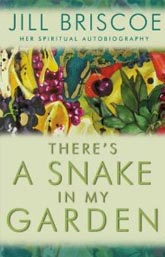
About four years ago, I became interested in reading spiritual autobiographies. I was not aware that this was a genre of literature until I read one or two and through a discussion with my friend Laura, learned that she had taken a class at Pepperdine that focused on this literary form. It was of utmost interest to me, mostly because I didn’t have any heroes of faith that I looked up to and wanted to model my life after. This is probably because I didn’t see the people and examples around me adequately, but judged them with a plank hanging out of my own eye (Matthew 7). In any case, I began to savor and delight in reading other people’s tales of faith and growth and discipleship. I have not read any of the “greats” but in the next few days, I do want to write about three that have most impressed me so far. The first one, I barely remember and I would like to re-read, but I don’t have the book any longer. I think I will purchase it tonight and re-read it so I can report back to you. It is fictional, and called “Stepping Heavenward” by Elizabeth Prentiss and is likely based on her own life. The second is E. Stanley Jones, the third is Jill Briscoe, and the fourth is Ruth Pakaluk. (Ruth’s is not really an autobiography; it was compiled by her husband prior to her untimely death from breast cancer). These are amazing modern people who have taught me so much. It does hurt me though that I don’t know people living today for whom I have such regard. Please God show me.
PS as I was writing this, I recalled a treasure I had as a child. I received the Fox's Book of Martyr's (or an abridged version of the Saints) when I celebrated my First Communion as a child. I recall loving to read of the sacrifice and martydom of the sacred, holy men and women.
PS as I was writing this, I recalled a treasure I had as a child. I received the Fox's Book of Martyr's (or an abridged version of the Saints) when I celebrated my First Communion as a child. I recall loving to read of the sacrifice and martydom of the sacred, holy men and women.
Tuesday, May 24, 2011
His Peony

Long past the prime of blossoming spring rose.
Past, more, the sweet, fine scent its wilting bloom;
Tight clench of bud in spheres, in May still closed
June! Peonies display celestial plume.
The life span of the floral bed of spring
Lasts mere a breath then droops; petals a-ground.
Late blooming spheres just woke—fresh, light, smelling
Fragrant; beauty all summer-long abound.
I was once hermitted within my heart
Fearful, tearful, timid, wounded, forlorn
I gave one my love, my first—Now apart
Would I have more within? Was my soul shorn?
“My Peony, you’ve not used all your best;
Once opened up your art spills forth endless.”
-- JTG
Subscribe to:
Posts (Atom)